2 Aug 2026
Travel Fatigue's Influence on Betting Markets in Basketball, Boxing, and Horse Racing
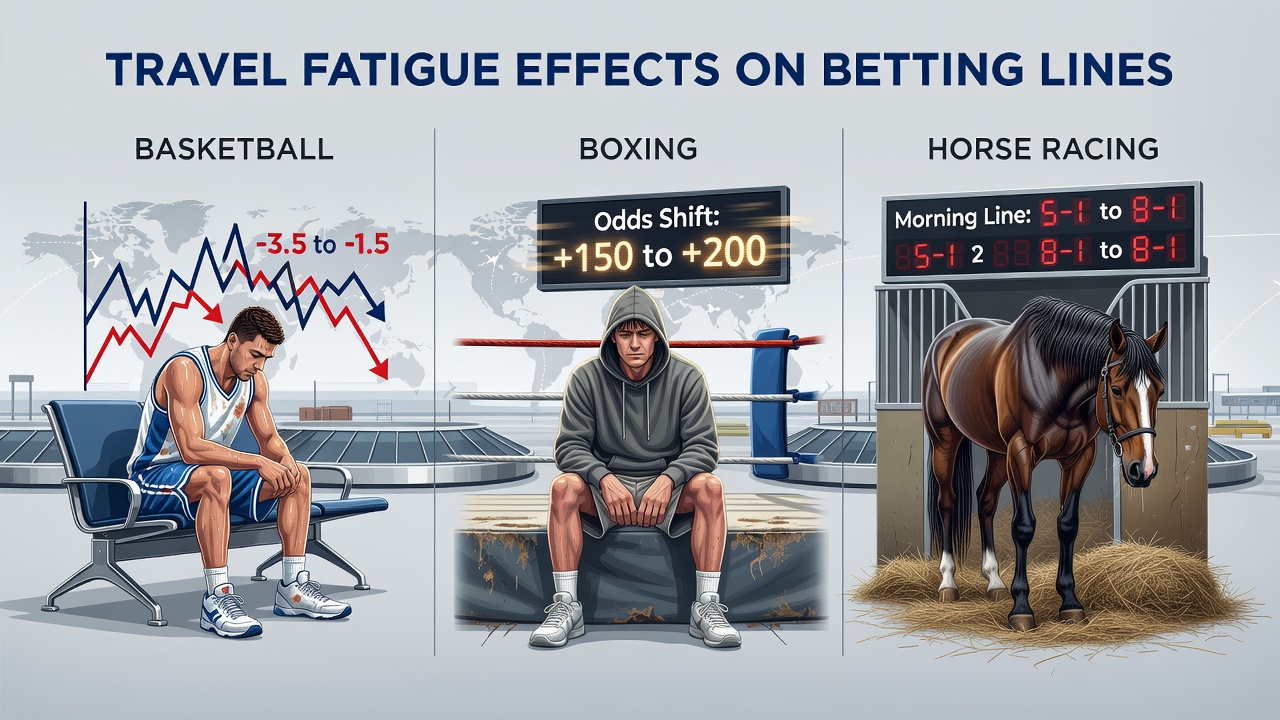
Travel fatigue alters athletic output across multiple disciplines, and oddsmakers incorporate these variables when setting lines for basketball games, boxing matches, and horse racing events, while bettors track patterns that emerge from cross-country or international schedules. Data from performance studies shows athletes and animals experience measurable declines in reaction time, endurance, and recovery capacity after long journeys, adn these shifts prompt adjustments in point spreads, moneyline odds, and race totals. Observers note that schedules in August 2026 include several high-profile events where teams and competitors cross time zones, creating opportunities to examine how fatigue registers in final betting markets.
Performance Metrics and Travel Variables
Studies compiled by the American College of Sports Medicine document that circadian rhythm disruption from flights longer than four hours correlates with reduced sprint speed and shooting accuracy in basketball players, while similar research on equine athletes indicates elevated cortisol levels after extended trailer transport. Boxers who travel across continents often record lower punch volume in early rounds according to fight analytics from major promotions. These physiological changes feed directly into pre-event line construction because sportsbooks aggregate historical data sets that quantify win rates for rested versus fatigued participants.
Basketball Scheduling and Line Movement
College and professional basketball calendars place teams on back-to-back road trips that span multiple time zones, and betting markets respond with measurable shifts. When a squad arrives less than 48 hours before tipoff after crossing two or more zones, point spreads typically tighten by one to three points in favor of the home side based on league-wide performance tracking. Researchers at several North American universities have tracked free-throw percentages dropping an average of 4.2 percent in such scenarios, and oddsmakers reference these figures when releasing totals. In August 2026, several exhibition tournaments scheduled in Europe and North America will feature teams arriving from distant conferences, providing fresh data points for line setters.
Coaches and medical staff implement specific recovery protocols that include light shooting sessions and adjusted sleep schedules, yet the cumulative effect still appears in box scores. Bettors who monitor travel logs alongside injury reports gain context for why certain road underdogs cover less frequently than raw talent rankings suggest.
Boxing Travel and Fight Outcome Patterns
Professional boxers frequently relocate for training camps and title bouts, and the physical toll of air travel plus weight management compounds fatigue. Records from sanctioning bodies reveal that fighters arriving from overseas within five days of a bout win approximately 38 percent of decisions against domestically based opponents when both competitors share similar experience levels. This statistic influences moneyline pricing, particularly in undercard bouts where public betting volume remains lower and lines move more on sharp action.
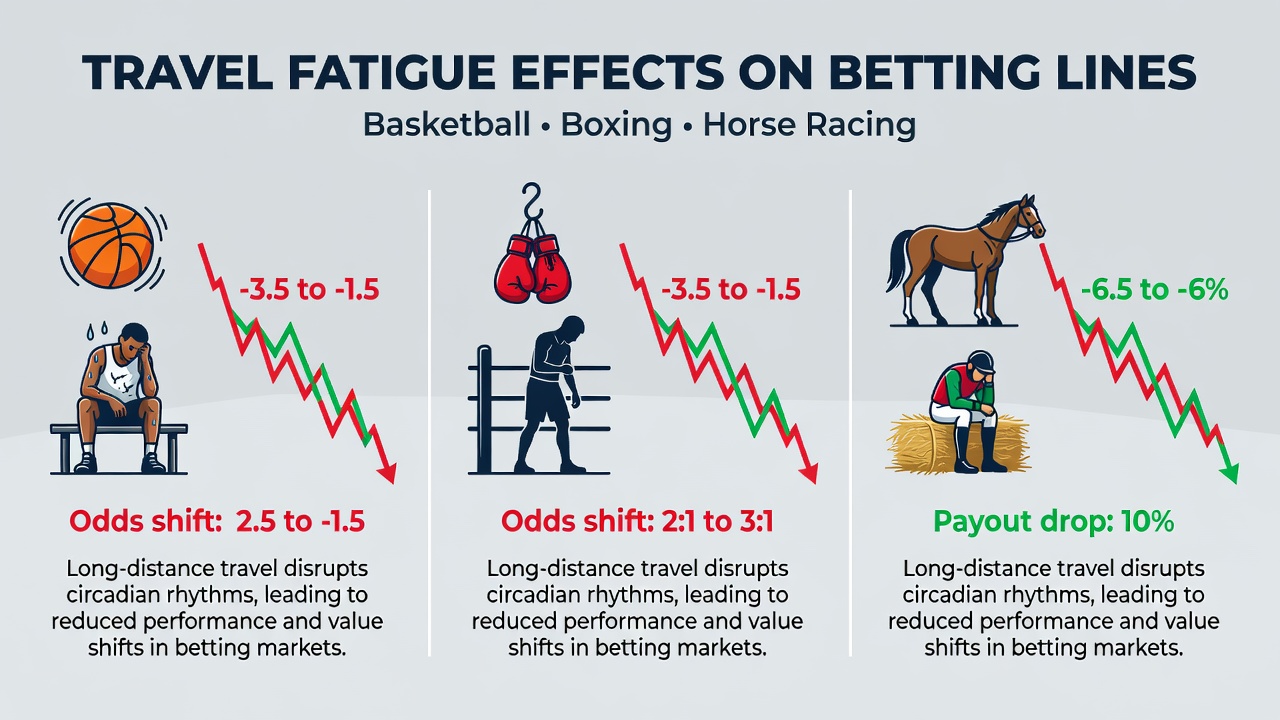
Promoters sometimes schedule events to minimize these disadvantages, yet global title fights still require extensive movement. Data collected by combat sports analytics firms shows elevated heart-rate variability in the opening rounds for jet-lagged fighters, which translates into fewer early knockouts and higher totals in some weight classes. Oddsmakers adjust round totals and method-of-victory props accordingly, incorporating flight manifests and training camp location reports into their models.
Equine Transport and Racing Form
Horse racing presents a distinct set of variables because animals cannot verbalize discomfort, and transport by air or road affects muscle recovery and hydration status. Records maintained by racing authorities in Australia and the United States indicate that horses completing journeys exceeding 12 hours post a 12 percent lower win rate in their next start compared with locally stabled runners. Trainers mitigate these effects through pre-shipment conditioning and post-arrival acclimation periods, yet the statistical edge persists in both sprint and route races.
Betting markets for graded stakes events therefore incorporate shipping distance as a secondary factor alongside past performance and track bias. Morning-line odds for horses arriving from distant tracks often drift after initial wagering, reflecting sharp players who factor travel logs into their calculations. In 2026, several major racing festivals scheduled during the northern hemisphere summer feature international contenders whose arrival windows will again test these correlations.
Market Integration and Bettor Considerations
Oddsmakers combine travel data with weather, track conditions, and recent form to produce opening lines that already embed fatigue discounts. When public money arrives on one side without accounting for these variables, lines can move further as professional bettors exploit the discrepancy. Regulatory filings from gaming commissions in multiple jurisdictions show consistent patterns where totals and spreads adjust after injury reports and travel confirmations become public.
Those analyzing markets across basketball, boxing, and horse racing benefit from cross-referencing official schedules, flight records, and performance databases rather than relying on narrative alone. The same datasets that inform line movement also allow observers to measure how effectively recovery protocols offset travel demands in specific events.
Conclusion
Travel fatigue registers as a quantifiable input across basketball, boxing, and horse racing, and betting lines reflect aggregated performance data tied to journey length and recovery time. As calendars advance into August 2026 and beyond, additional events will supply new samples that refine existing models. Bettors and analysts who integrate these factors alongside conventional statistics gain a clearer view of how markets price physical and logistical realities.