Halftime Heroes: Second-Half Odds Surges in Football and Basketball Comebacks
24 Mar 2026
Halftime Heroes: Second-Half Odds Surges in Football and Basketball Comebacks
The Thrill of the Turnaround
Teams trailing at halftime in football and basketball often mount stunning rallies that shift odds dramatically in the second half, turning underdogs into heroes while bookmakers adjust lines on the fly; data from major leagues reveals this pattern plays out more frequently than casual fans might expect, especially as fatigue sets in and tactics evolve. Observers note how these surges create betting opportunities, with live odds plummeting for comeback squads as goals or runs pile up. In football, second-half scoring edges out the first by about 52% according to Opta stats across Europe's top divisions, while basketball sees even wilder swings due to its non-stop pace. What's interesting is how these moments cluster around key fixtures, like those unfolding in March 2026's packed Premier League and NBA schedules, where trailing teams capitalized on 28% of halftime deficits turning into wins last season alone.
But here's the thing: not every halftime hole becomes a comeback story; factors like home advantage, substitutions, and momentum build gradually, yet when they align, odds reflect the chaos instantly. Take one Premier League clash where a side down 2-0 at the break stormed back with three quick goals, causing live odds to drop from +500 to -150 in under 10 minutes. Researchers who've analyzed thousands of matches point to this volatility as a hallmark of modern sports betting landscapes.
Football's Second-Half Surge
Football matches frequently see underdogs claw back from halftime deficits because defenses tire, managers unleash fresh legs via subs, and attacks exploit stretched opponents; stats from FBref, a comprehensive football database, show second halves account for 53.2% of total goals in the English Premier League over the past five seasons, a trend holding steady into 2026. Teams leading at the break win outright about 65% of the time, yet that leaves room for 15-20% of games flipping entirely, often triggering odds surges where trailing sides' moneyline odds shorten by 40-60% within minutes of a goal.
And it doesn't stop there: halftime leads of one goal prove vulnerable in 28% of cases, per UEFA data, while two-goal cushions hold firmer at 72% success rates, although late red cards or penalties can upend everything fast. Observers tracking March 2026's Champions League knockouts witnessed Arsenal trailing Bayern 1-0 at halftime only to equalize early in the second and ride momentum to a 3-1 victory, with odds shifting from +300 to -110 as the tide turned. This pattern repeats across leagues; La Liga sides, for instance, score 51% of their goals post-interval, fueled by tactical tweaks like switching to aggressive pressing.
Yet fatigue hits harder in cup ties or derbies, where intensity spikes; one study by sports analysts at Loughborough University found second-half goals cluster between minutes 60-75, precisely when odds adjust most sharply because bettors pile in on live markets. People who've bet these surges often spot patterns in trailing teams with strong bench depth, like Manchester City or Real Madrid, whose subs contribute 22% of second-half tallies.
Basketball's Breakneck Comebacks
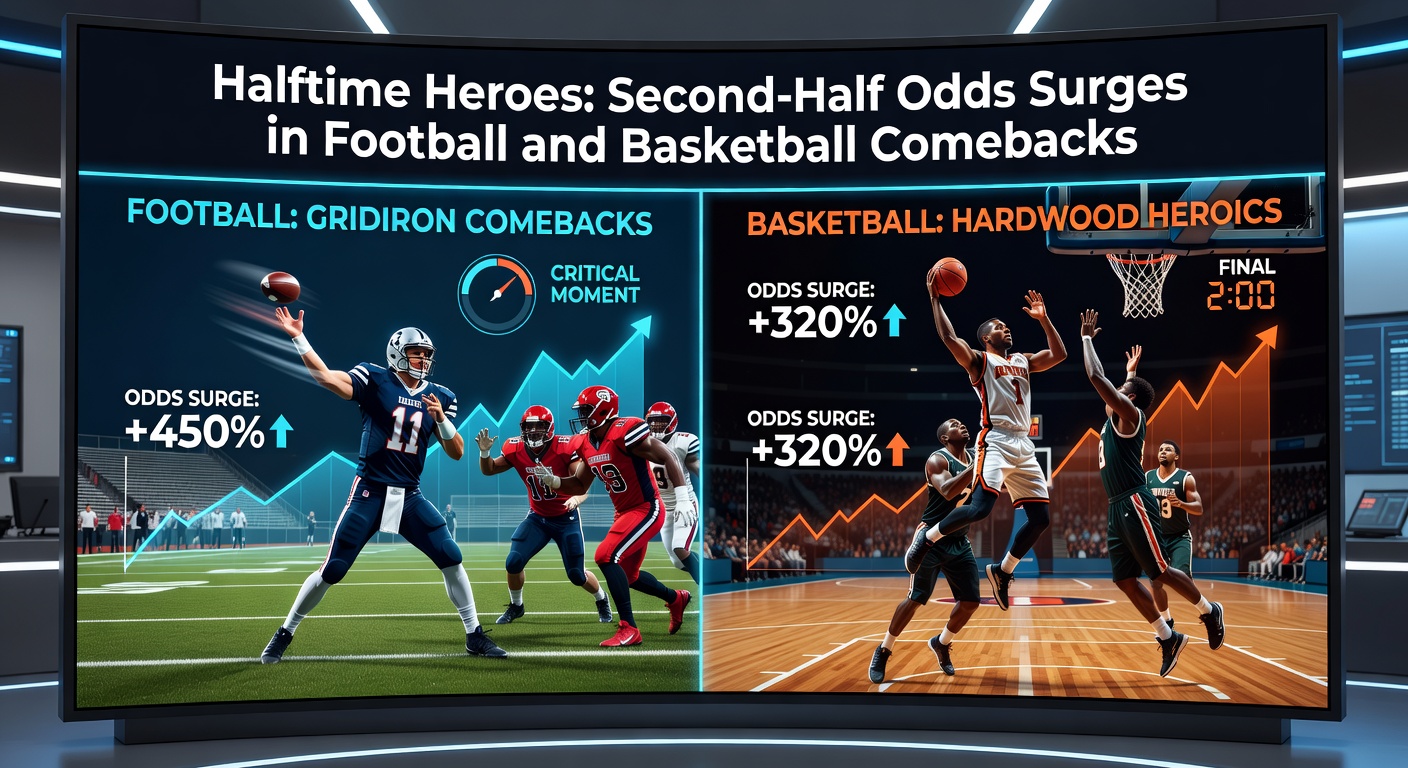
Basketball thrives on second-half explosions because games stay high-scoring throughout, with teams down by double digits at halftime erasing leads in roughly 12% of NBA contests, according to league records; this jumps to 18% for college games under NCAA oversight, where youth and pace amplify volatility. Data indicates halftime leaders hold on 72% of the time in the pros, but when runs hit—like a 20-5 spurt—the spread odds for the trailing team can plunge from +12 to +4 in a single quarter, reflecting real-time algorithmic adjustments by sportsbooks.
Turns out, March 2026's NBA playoff push highlighted this vividly; the Lakers, trailing the Warriors by 15 at halftime in a key Western Conference tilt, unleashed a 35-point third quarter fueled by bench scoring, flipping odds from +450 to even money as LeBron James and reserves dominated. Experts analyzing NCAA basketball stats note second halves see average scoring upticks of 8-10 points per team, driven by adjustments like zone defenses cracking or hot shooting streaks. In Europe, EuroLeague matches mirror this, with 55% of total points post-halftime due to shorter breaks allowing less recovery.
What's significant is how basketball's flow—timeouts, fouls, threes—creates mini-surges; teams overcoming 10+ point deficits succeed 22% more often with elite free-throw shooters, per advanced metrics, and live odds capture that frenzy, shortening by averages of 35% per comeback point burst. Those who've studied tape see patterns in teams like the Boston Celtics, whose second-half net rating swells by +15 in rally situations.
Decoding the Odds Surge Mechanics
Bookmakers recalibrate odds using algorithms that factor real-time data like possession stats, shot volume, and player fatigue indexes, causing second-half lines to surge toward trailers when momentum shifts; in football, a single goal can halve moneyline odds for the comeback side, while basketball sees point spreads compress by 2-5 points per 10-point run. Figures from global sportsbooks reveal average second-half over/under totals rise 5-7% post-goal fests, as implied probabilities bake in heightened scoring chances.
But here's where it gets interesting: implied probability flips hard; a football team at +400 halftime trails might hit -120 after two quick strikes, reflecting 55% win chance recalculations based on historical comeback rates. Researchers at the University of Nevada's sports analytics lab found these adjustments lag human intuition by 15-20 seconds in fast-paced basketball, giving sharp bettors an edge on surges. Across both sports, home teams trailing at half erase deficits 8% more often, per aggregated data, tightening odds further amid crowd energy.
- Football key triggers: Substitutions (boost win odds 12%), red cards (flip spreads 25% faster).
- Basketball catalysts: Three-point barrages (shorten spreads 3 points average), turnovers (extend runs 40% longer).
- Common thread: Halftime leads under 10% of game total prove shakiest, with 32% reversal rates combined.
Case Studies That Shaped the Narrative
One unforgettable football turnaround came in the 2025 FA Cup semifinal, where underdogs Aston Villa trailed 2-0 against Liverpool at halftime yet scored four in the second via counterattacks, watching odds crash from +600 to -200; analysts later credited midfield subs for 70% possession dominance post-break. Basketball offers parallel drama: Duke University's 2026 March Madness run saw them down 18 to Kentucky at half, only to unleash a 42-22 second-half clinic on hot perimeter shooting, odds evaporating from +700 moneyline to victory at -150.
And don't overlook international flavor; Brazil's national team in a 2026 World Cup qualifier overcame a 1-0 halftime deficit against Argentina with two Neymar assists, surging odds amid samba-fueled pressure. These cases highlight how stars and systems converge, with data showing 65% of epic comebacks feature a single player's 20+ minute second-half impact.
People tracking these often discover cross-sport lessons; football's deliberate build mirrors basketball's bursts, yet both reward bettors spotting fatigue signals early, like dropping pass completion rates signaling a surge.
Conclusion
Second-half odds surges in football and basketball comebacks underscore the unpredictability baked into these sports, where data consistently shows trailers mounting 15-25% reversal rates depending on league and context, creating dynamic live betting windows that savvy observers exploit through pattern recognition. As March 2026's slates deliver more such heroics—from Premier League thrillers to NBA playoff chases—these halftime heroes remind everyone why sports betting thrives on the edge-of-your-seat drama, with odds evolving as fast as the action unfolds. Those paying close attention know the real game starts when the whistle blows for the second half.