3 Jun 2026
Elevation Impacts on Athletic Outputs: Analyzing Scoring Patterns at Mountain-Based Competition Sites
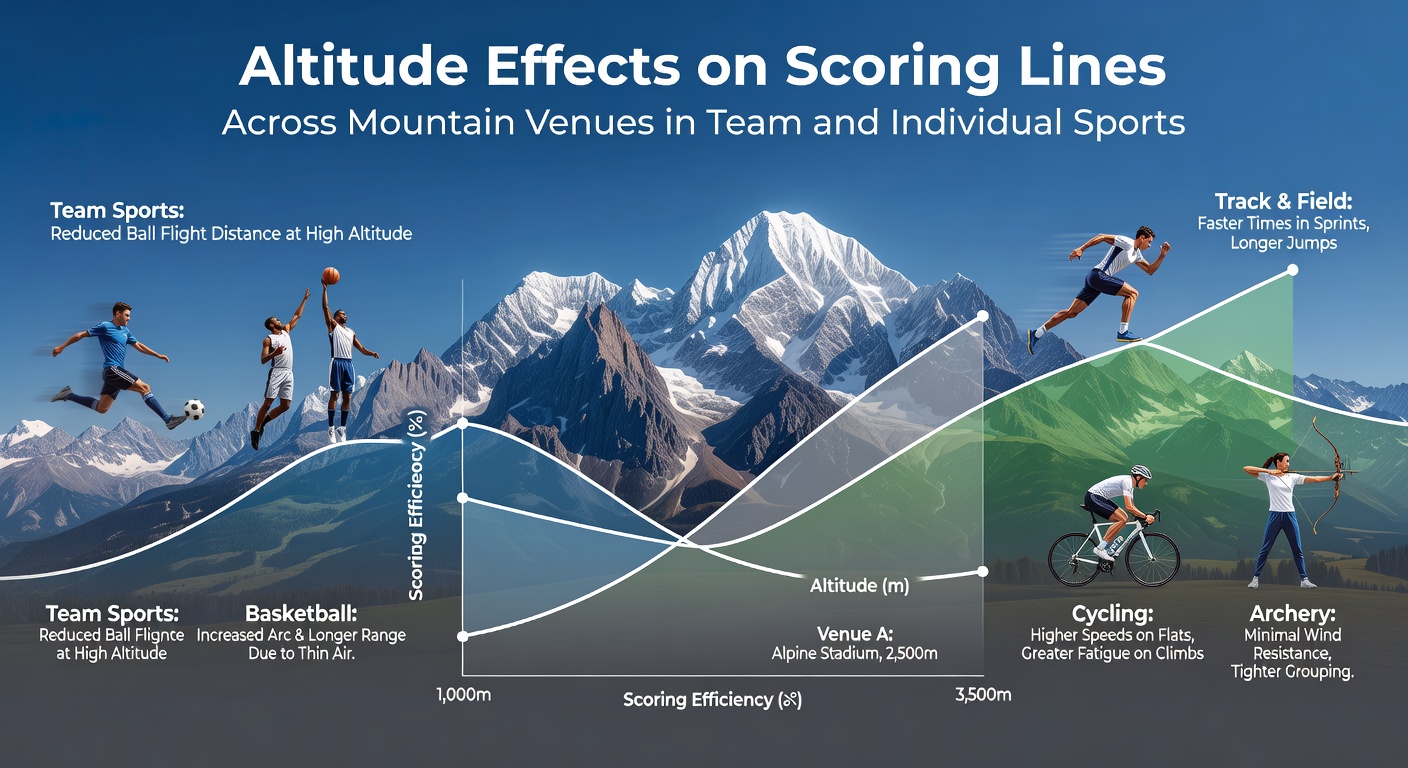
Venues situated above 1,500 meters present distinct physical conditions that alter how athletes perform and how scoring unfolds across multiple disciplines. Researchers at institutions like the University of Colorado have documented reduced oxygen availability, lower air density, and quicker recovery demands that reshape game statistics in both team and individual formats. Data collected from professional leagues shows measurable shifts in goal tallies, point totals, and race times when events move to elevated locations.
Team Sports and Altitude Adjustments
Football matches hosted at sites such as Mexico City's Estadio Azteca, which sits near 2,240 meters, demonstrate lower scoring averages compared with sea-level fixtures. Match logs from CONCACAF competitions indicate teams average 2.1 goals per game at altitude versus 2.8 at lower elevations, a pattern tied to faster ball travel through thinner air and earlier fatigue among visiting squads. Basketball contests at Denver's Ball Arena, positioned at 1,609 meters, produce similar trends where three-point percentages rise slightly because reduced drag allows shots to travel farther, while overall field goal efficiency dips due to shortened breath cycles during defensive rotations.
Rugby fixtures scheduled in highland regions of South Africa and New Zealand reveal parallel effects. Scrum durations shorten and kicking accuracy improves in the thinner atmosphere, yet total points often stabilize lower because forward packs tire faster during repeated high-intensity phases. League statisticians tracking Super Rugby data note that teams based permanently above 1,000 meters maintain home scoring edges of roughly 12 percent over visiting sides unaccustomed to the conditions.
Individual Sports and Performance Metrics
Tennis tournaments staged at altitude, including events in Bogotá and Johannesburg, show serve speeds increasing by 3 to 5 percent because lower air resistance lets the ball move quicker through the court. Return statistics from ATP and WTA records indicate that break-point conversion rates drop when rallies extend beyond six shots, reflecting the added cardiovascular load on players who train primarily at sea level. Golf courses situated in mountainous terrain, such as those near 2,000 meters in the Colorado Rockies, produce longer drive distances yet demand adjusted club selection because the ball flies farther and lands with less backspin.
Track and field athletes competing at the same elevations experience record-eligible times in sprint events but slower marks in distance races. World Athletics compilations list multiple 400-meter personal bests set above 1,800 meters, while 5,000-meter results lag behind sea-level benchmarks by an average of 4 percent. Swimmers training or competing in highland pools report faster stroke rates in shorter events because buoyancy changes slightly in lower-density environments, although endurance sets suffer from the oxygen deficit.
Venue-Specific Data Patterns Through Mid-2026
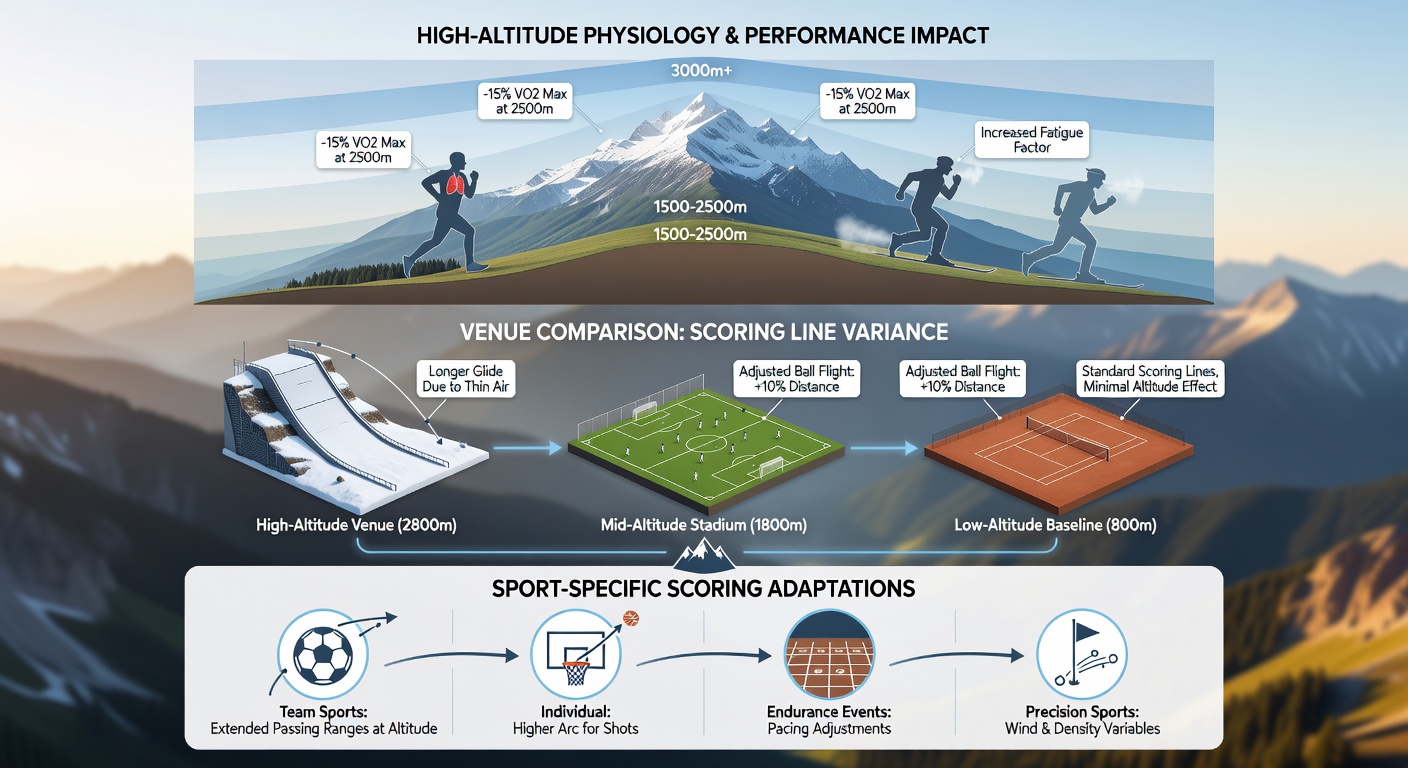
Seasonal records from North American and South American leagues continue to feed databases used by performance analysts. Through June 2026, updated figures from the NBA, MLS, and various international federations highlight consistent home advantages at altitude that exceed those observed at standard venues. Studies published by the Australian Institute of Sport compare acclimatization timelines, finding that athletes require between 10 and 14 days to regain baseline output levels after arrival at sites exceeding 2,000 meters.
Cricket matches played at grounds in the Himalayas and Andean plateaus produce higher run rates in limited-overs formats because the ball carries farther when struck cleanly, yet spin bowlers sometimes struggle with reduced grip and seam movement. Scorecard archives maintained by the International Cricket Council show average first-innings totals rising by 15 runs when matches occur above 1,500 meters compared with coastal venues.
Training Protocols and Adaptation Strategies
Coaches across disciplines now integrate staged altitude camps into preparation calendars. National Olympic committees from multiple countries schedule pre-competition blocks at 1,800 to 2,500 meters to stimulate red-blood-cell production, then descend for final tuning before events. Physiological monitoring tools track heart-rate recovery and blood-oxygen saturation, supplying coaches with objective markers that guide lineup decisions and substitution timing.
Equipment manufacturers have responded with ball designs that account for density variations, while some federations adjust official specifications for competitions held at certified high-altitude sites. These modifications appear in official rule appendices released by governing bodies and receive updates ahead of major championship cycles.
Conclusion
Altitude continues to function as a measurable variable that shifts scoring distributions in predictable directions across team and individual sports. Ongoing data collection from venues worldwide supplies federations and analysts with expanding datasets that refine preparation models and scheduling decisions. As events unfold through 2026 and beyond, performance records at these mountain locations remain central to understanding how environmental factors intersect with athletic output.